AM Publishing New Zealand
Adrienne Charlton BA, DipEDIT

Publishing and Ebook Services
Producing a Book
"Book design, like typography, is one of those things we take for granted unless we practice them professionally; as readers most of us don't consciously notice how a page is laid out unless it screams to be noticed. But our ability to enjoy and use books depends partly on the art and craft of the book designer."
We offer a full book design service for those wishing to self-publish, under our own imprint (AM Publishing New Zealand) if desired, including:
- Book Editing
- Proofreading and Copy Editing
- Typesetting
- Design layout in InDesign
- Conversion to pdf from InDesign for printing
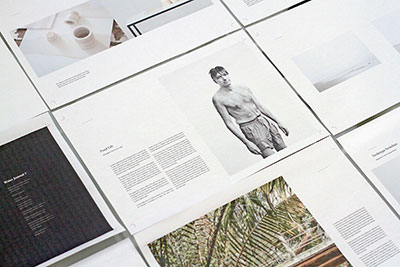
- Photographs - from minor retouching and colour correction to full restoration work, for small projects or large, illustrated books
- Cover design
- Providing ISBN numbers and barcodes
- Providing NZ National Library and Nielsen's listings
- Facilitating the services of a printer, with competitive pricing
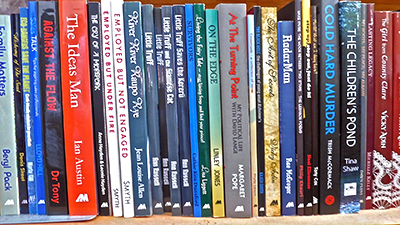
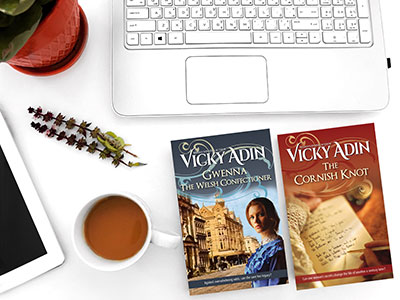
View a selection of our Published Books
Photo Restoration and Retouching
Where images are required in a book, especially old photos, we can digitally enhance and repair your special photographs to preserve them for generations to come. We do all 'conversions' required so that print-ready, formatted files are incorporated into your book file. As many as you like - we have produced books with more than 500 images in them.
We can retouch them to get rid of major and minor blemishes, change colouring, change a black-and-white photo to a colourised one, right through to restoring old or damaged photos.
You can view examples of our work on the Photo Restoration page.
Please note: We produce finished book files as pdfs, one for the book itself and one for the cover. These are used for proofing, when a final check is done, and the author signs off any new corrected files for printing. We do not do sales or marketing of books.
"Getting a book published does NOT equate to readership. You must cultivate a readership every day of your life, and you start TODAY. Your readers will not be interested in reading just one book; they will be interested in everything and anything you do - and that includes interacting with you online.
Audience development doesn't happen overnight (or even in six months or a year) - and it's a process that continues for as long as you want to have a readership. It shouldn't be delayed, postponed or discounted for one minute."
Article by Nicky Pellegrino in the NZ Herald, Aug 27, 2012:
Précised from: The four different publishing paths authors can pursue today
Four things every writer needs to know if they are planning on publishing today - August 7, 2012 by keithogorek
The world has changed for authors which means they have new opportunities and consequently responsibilities. This is both a thrilling and confusing time for authors, so I think it is more important than ever for authors to be informed and choose the best option for getting published based on their goals, skills, patience, and budget.
Gone are the days of walking to the mailbox and pulling out a pile of rejection letters and wondering if you would ever get published. Today, every author can get published and get his or her book into the hands of readers - whether you use a DIY method, assisted self-publishing (e.g. AM Publishing NZ's services) or sign with an agent (we don't have many in NZ) and try to acquire a traditional publishing contract.
That means authors have more opportunity than ever before, but they also have more responsibility. And that is not something anyone seems to be talking much about. Whereas before it was the publisher, now it is the author who has the responsibility to set clear goals and a budget. Having clarity about these two areas will help authors make the best decision about which publishing path is best for them. In addition, they also need to have a realistic assessment of the skill and time they have to put to the project.
You can change your brakes and wash your car for less money if you do it yourself, rather than paying someone to do it for you. But if you don't know how to change brakes or you don't have time to wash your car, you should pay someone to do it for you. I think the same type of decision-making should be applied to making a publishing decision.
In addition, authors should:
1. Make sure you have a clear picture of who the audience is for your book.Saying your goal is to sell to every man, woman, and child on the planet (I had an author tell me that) is not realistic.
2. Understand your options.DIY, assisted, and traditional publishing all have advantages and drawbacks. Inform yourself. There is plenty of information out there.
3. Think about your marketing while you are writing your manuscript,and know there are no guarantees with marketing. Just ask any marketing director at any company in the world. You do some things that you think will work and they don't, but you also do some things that far exceed your expectations. The key is to be consistent and experiment. Not everything is going to work, but if you do nothing, you don't stand a chance.
4. This industry-changing shift in publishing does not mean everyone will be successful, but it does mean everyone will have the opportunity to be successful.Honestly, I think that is the most exciting thing about the time in which we live. Indie publishers are simply providing the opportunity. Not that long ago, authors only had one choice: find an agent and pray they could sell the manuscript. That has all changed, and I think that is amazingly exciting.
Too many authors publish a book with the expectation that the world is just sitting, waiting for their manuscript to get finished, and once they make it available for sale, the world will come to them. The reality is, being an author takes an informed, consistent effort, but when you get those emails from readers that tell you how much they enjoyed your book or found it helpful, it is one of the most rewarding experiences you can have.
Certainly, there are economic considerations when it comes to publishing, but I think the one common goal that unites all authors is they want to impact people with their writing. Writing to help others or telling a story that has to be told or supporting a business or ministry are worthy pursuits because they impact people.
As I say to authors all the time, I don't know how many books you will sell if you publish, but I know how many you will sell if you don't. I don't know how many people you will impact with your book if you publish, but I know how many you will impact if you don't. And to all the naysayers and fearmongers, I would like say: quit bickering about methods, and let's encourage authors to seize the opportunity.
How to write a novel and get it published (PDF)© Joel Friedlander
Publishing your own books has become an amazing option for lots of authors, both for your new books and for books you might have published in the past and for which you now own the publishing rights. But publishing your books is only half the equation for success.
What's the other half?
Getting those books to the readers who - whether they realize it or not - are avidly waiting to buy and read them.
Let's look at three ways you can get started learning about:
- who these readers are
- what they like
- what they're willing to pay for your books
- where they hang out
- how they like to communicate
Wow, that was a pretty big statement. I'm not saying you can learn all that stuff at once, but I am saying that there are easy and free ways to get started acquiring this information, and that's what we're going to look at here.
3 Ways to Get Started
1. You're probably not going to be surprised, but the first place you should head is your nearest Google search bar.
Let's say you write about parenting. Use Google to search for "parenting forums" and "parenting discussion boards." If you write about football, use "football forums" and "football discussion boards."
You're going to get a lot of hits to research, and I'm betting you'll find some very active communities with engaged people talking about your specific topic. Some of these forums are quite large, and you might need to drill down a bit to find the sections?that apply to your specific niche, but this will put you in immediate contact with people interested in your topic.
2. Another great way to find your readers is through blogs in your niche.
Blogs that have been online for over a year will have a readership of some size. You'll need to do a little research to find the blogs that have the most readers interested in your topic.
For instance, if you found a discussion forum in step 1, check the links that belong to frequent contributors there, and you'll start to connect to the blogs in your niche.
Once there, look at the comments on popular posts and start exploring the links (usually the link is embedded in the name of the person who left the comment) for even more places readers hang out.
3. Finally, use the search capabilities on some of the big social networking sites.
These sites are useful not because they have hundreds of millions of users, but because they each have the ability to locate specific groups of people.
For instance, on Twitter you can use http://search.twitter.com to find trending topics or hashtags (words with # in front of them) related to your subject. You can search on #cycling to find thousands of people interested in bicycling and then narrow your?search further from there.
You can use this same strategy on Google+ to find articles and people commenting on them with the same #cycling search. Following the strands of the networks you'll discover this way will lead to communities of readers you can start interacting with.
Getting Your Book to Your Readers (PDF)© Joel Friedlander
In order to understand how book distribution works you need to understand publishing as a media enterprise. Because books are such personal objects, and readers have such an intimate experience when reading, it's easy to forget that publishers are media companies.?What I mean by this is that their businesses are mostly national businesses. Mass media, by its nature, is a broad avenue with many outlets. Look at these four effects that come from this fact:
- One to many - Mass media have few inputs, but many outputs. In other words, publications that appeal to the broadest possible audience are the mainstay of media companies, including publishing.
- National scope - because it's necessary to reach the largest number of people, most campaigns for books published by large publishers are national campaigns. Rather than addressing a particular niche, books are positioned to achieve the widest possible readership.
- Blockbuster mentality - because books are pushed into national campaigns, a great deal of money is tied up in launching these books. This naturally leads to a high risk strategy. Publishers now are getting upwards of 60% of their income from new titles. Years ago most of the revenue came from backlist, and there was an incentive to find books with a long shelf life. Now publishers expect some new books from each year's harvest will become wildly successful on a national stage, carrying the rest of the company with them. Books that may only be moderately successful can't "earn out" in this scenario, and are second-class citizens.
- Protection of retailers - the risks involved in the blockbuster mentality are not lost on retailers, who have to bear the brunt of the publishers' gambles. One of the chief features of the book distribution system - you can return the books that don't sell - grew out of this asymmetry between the risk and rewards of the publishers and their partners, the bookstores. In order to "protect" the bookstores, publishers made their books returnable, eliminating much of the risk from the equation.
So in order to operate profitably within this system, a publisher has to:
- Identify books that will have a very broad appeal
- Market these books to a national audience
- Print and distribute enough of these books to take advantage of mass media exposure
- Absorb the losses on all "losers" by using the profits from big "winners"
What This Means for Indies
The effect of this system is that, for most indie publishers operating on their own, real national book distribution is very challenging. And by very challenging, I mean almost impossible to make a profit at.
The business is truly cursed with the returnability of its products. A book may appear to be profitable, and you may have received payment for hundreds or thousands of books that seem to have been sold. But that picture can be reversed at almost any time. You might look out your window and see a truck pulling up to with many of those same books being returned to you. Of course, this will also come with a debit to your account from whoever wholesaled the books for you.
Added to this is the expense, clearly beyond most indie publishers, of printing enough books to stock enough stores around the country to take advantage of a media campaign that you probably can't afford anyway.
This would imply that the indie publisher or the self-publishing author with only one book has an unsustainable business model, if your business model requires you to use the book distribution system. It's obvious that such a publisher cannot operate on the "blockbuster" model, since there are no "winners" and "losers" but just the one book you've slaved over and now hope to make a profit from.
You can't afford to print 5,000-10,000 books, and you won't get an account with a real distributor anyway. You won't have a sales staff out pitching your book to book buyers at bookstores and discounters and book clubs. You won't be running ads on busses and paying for your book trailer to be shown on the local news. You won't be setting up a 10-city tour for yourself, or engaging in any of the other crucial parts of this distribution system.?In short, it won't work for most indie or self-published books.
Don't get me wrong. For the right book, the right author, and with the right support and enough of an investment, you can succeed at this, but the odds are very long indeed. The most successful self-published books succeed despite this distribution system, not because of it. They establish such a strong appeal among readers that demand for the book pulls it into the supply chain, and soon enough the author will probably license the book to a larger publisher who is well-placed to exploit that demand, something virtually no small operation can do on its own.
An Open Secret
Everyone in book publishing knows these facts, and lives with the reality that the business rests on what is essentially a consignment business model. There are two problems with this model:
1. By its nature it denigrates the very products it intends to sell. Books that are touted as the next great read, or essential scholarship, disappear just weeks after their launch if sales figures aren't high enough. The only commitment to these books on the part of publishers, their marketing staffs and the booksellers, is a conditional one: I'll love you as long as you sell.
2. It creates economic uncertainty for publishers. If your books are returnable, if you really have no idea which ones will succeed and which ones will fail because of the way the books are acquired and marketed, you have no way of controlling financial risk, even in months that appear to have already gone "into the books."
The New World of Book Distribution
This whole sorry situation is one of the reasons why independent, direct-to-the-reader distribution that's made possible by the internet has appealed so strongly to self-publishers and book readers who are looking for more than what's offered to the largest possible audience. What's pushing this along?
- Amazon and other online retailers, democratizing influences of the highest order, present any and all books on an equal footing, creating portals for anyone who can publish a book.
- The Internet itself, with its ability to discover products based on search rather than on wide advertising, creates a trail to those portals.
- Social media, in which intermediaries are dispensed with as readers and authors interact with each other, mitigates the whole blockbuster phenomenon.
- Ebooks, which eliminate the risks of over-production, over-distribution and returnability, stand the blockbuster model on its head. They allow, even encourage, the opposite model, what you might call the "experimental" model, where publishers are encouraged by the lack of financial investment to put out lots of products instead of loading all their efforts and hopes on one book, and which encourage experiments with pricing that are impossible with printed books.
All this has created what you might call a golden age for indie publishing. As long as indie authors understand the nature of the book distribution that's available to them, and exploit the advantages they have over larger publishers, amazing sales can be the result.
The long history of self-publishing leading up to now has mostly been about marketing to niche audiences. That remains the strength of indie publishing today. Making those niches profitable, using the content we publish ourselves, and understanding the power of social media marketing bring self-publishing success within reach.
Why Book Distribution Doesn't Work For You (PDF)Ebook
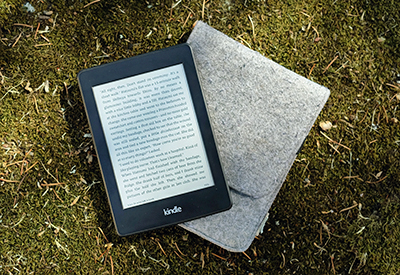
Many books can be produced as ebooks as well, but they have to be formatted in a special way. There is often not much money to be made from ebooks, in general, (usually via Amazon) so do your research well beforehand.
A great benefit of ebooks - that is, books formatted to be read on ereaders, rather than pdfs to be read on your computer - is that they dispense with the need for printing minimum runs of your book and all the costs that go with that. You may, of course, want to run both versions from your manuscript.
We can format your Word file so it can be converted to an ebook on Amazon, just bear in mind you cannot have complex images, tables etc. in an ebook. You can upload your file at very little cost and it will become part of their worldwide marketing and distribution network. This doesn't mean you can just sit and wait for money to roll in without having to do any more - you still need to promote yourself and your book so readers out there know to look for you - but it does mean you have good, basic international coverage which will hopefully start to bring some sales in for you, along with your own promotional ideas and back-up.

Don't be fooled into thinking Amazon loves books and will do anything to help authors. As one independent publisher, Dennis Johnson, said: "Amazon has successfully fostered the idea that a book is a thing of minimal value - it's a widget."
You can use social networking sites such as Facebook and Twitter as a window for your writing, as well as having your own website or writing a blog. Every little helps.
You still need to be aware that ebooks are generally very low priced, and often free! And you need to research how Amazon operates so you can run your account effectively yourself.
Print on demand
You also have the choice of 'print on demand' (POD) services - having books printed individually as they are ordered, often printed in the country in which they are ordered, so avoiding huge shipping costs. The main player in this area is Amazon.
POD also provides a cost-effective service to authors to avoid costly print runs whereby authors can order small numbers of their own books at wholesale prices. The quality is not usually as good as you would get from a local printer in New Zealand, but it is generally quite acceptable.
You must bear in mind, though, that minimum runs from some printers are now quite low, even in New Zealand, and the quality is very good, so it is still possible to produce high-quality books in small numbers. Books from Amazon, for instance, are the same unit price whether you buy 1 or 1,000 - it is only the shipping that reduces slightly. We don't have any POD printers in New Zealand, so you need to go through a company like Amazon for this service. Pdf files that we produce for print here in New Zealand, or anywhere in the world, are also usable for these processes.
What you must remember, though, whether you want to go down the route of hard copy or ebook, your manuscript MUST be well edited and proofread, because readers will not accept work that is below standard. Many ebooks attract reviewers on sites such as Amazon, and if you get a bad review, it is very difficult to undo the damage.